
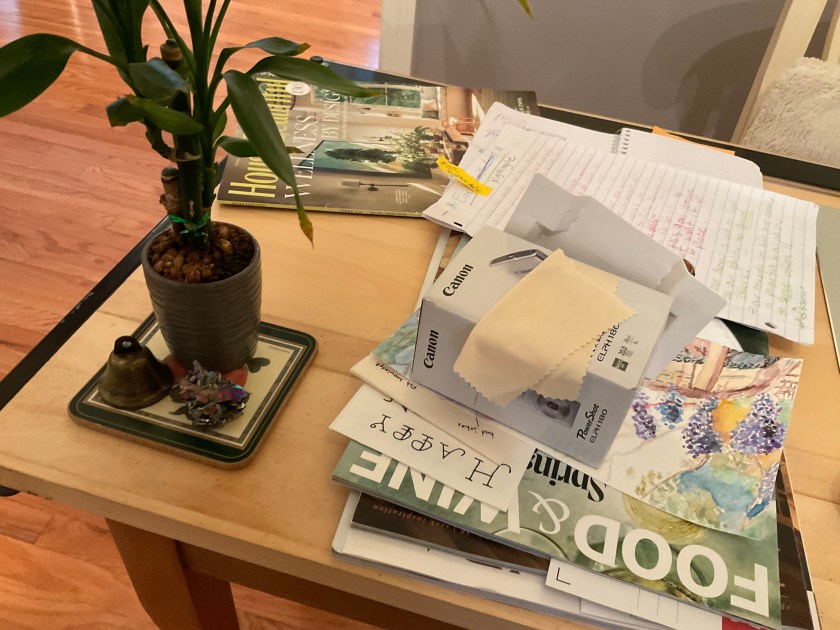
Sighing with exasperation, I stare down at the mess of papers at the end of the kitchen counter. I just cannot seem to make them go away. Supposedly, I have done the work. I’ve read books by the experts, done clearings, given things a home, tried to change my habits and even got a cute basket to gather the papers in. Still, the mess comes back. Why?
I am well aware of the downside of clutter. A messy desk equals poor concentration, and a lack of focus. An untidy pile of laundry in the bedroom can cause sleep disruption or anxiety. And constantly starting at disorder in our environment can be a real downer, and maybe even lead to moodiness or depression. So yeah, there is definitely a lot of reasons why the disheveled disarray is bad for us.
But is it really ALL bad? I mean, everything has an upside, right? Having a lot of stuff that you love doesn’t automatically make it clutter. Clutter is when the “stuff” loses its end goal and just starts taking over the place. I’ve been in spaces like that and there is a real sense of heaviness and confusion. Everything just seems to be screaming out for attention. And that can be an unhealthy drag on our energy.
Clutter also embeds a series of decisions we do not wish to make. Because every decision also comes with a loss, and clutter can be a comfort in not addressing those decisions. Like old photos and memories of the past, it can feel like a piece of our story that we are permanently clearing away.
Nevertheless, after doing a little research about the mayhem, there does appear to be some practical advantages. Turns out, clutter can actually encourage inspiration and creativity. For instance, have you ever noticed a college professor’s desk? It is usually pilled high with papers and books. Or your favorite home chef’s kitchen in the process of making an amazing meal? Even an artist’s studio? The very process of creation is, well, rather messy.
Clutter can even give us pause and remind us that we have enough. It serves as a potent visual reminder to be more aware of our consumption, and mindful of our purchases. Or it can be an optical nudge to complete necessary tasks, such as running shoes left out in a corner to encourage us to exercise more.
We can even turn that mess into a financial gain by selling what is no longer useful, needed or loved. And as we sort through it all, we give ourselves the gift of an emotional release and closure as we let go of what is no longer relevant, providing someone else the opportunity to give our old stuff new love.
All good things, for sure. But the Bottom line is clutter happens, it is just part of life. There is no way I am going to be able to keep the end of my kitchen counter free of papers. The best I can do is to store them neatly in that cute little basket and give them a weekly sort. Because as author and former radio speaker Earl Nightingale once said, “Successful people are not people without problems. They are people who know or learn how to solve their problems.”
And I’d like to use my artistic license to add, “Nor are they people without clutter, they are just folks who’ve learned how to manage it better!”
Coming soon: Megan and I will be resuming our “Let’s keep going” podcast! Stay tuned for more fun discussions on these topics and what we’ve been up to.

