Thanks for joining me!
Good company in a journey makes the way seem shorter. — Izaak Walton


Thanks for joining me!
Good company in a journey makes the way seem shorter. — Izaak Walton
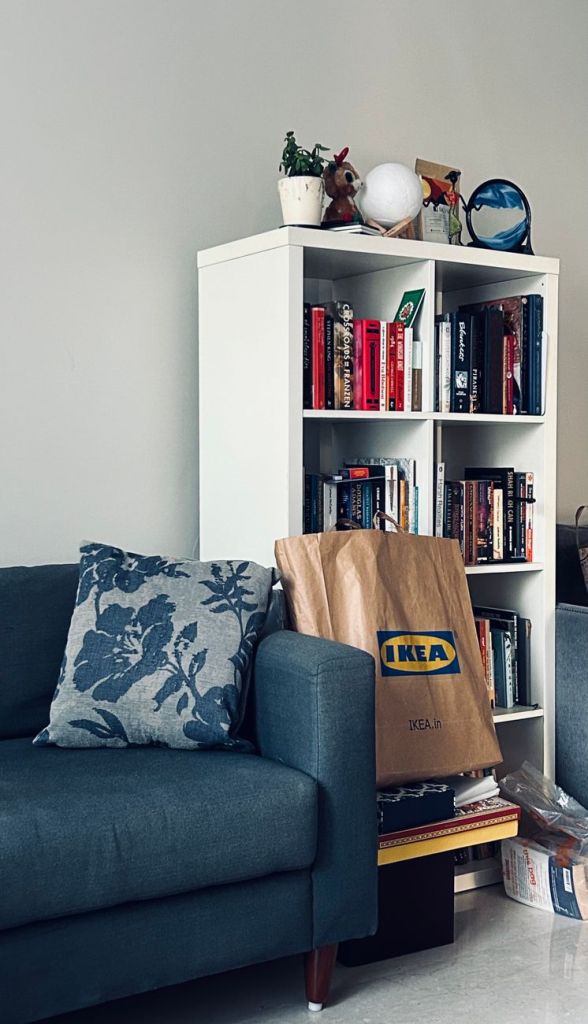
“We better get something,” my husband grouchily said, as we climbed into the car. “I could be out fishing, so we better not drive all the way there if we are not going to buy something.”
“Of course we are going buy something,” I irritatedly respond. “That is the whole point! You can only purchase so much from Amazon while lying on the couch, you know? After all, we don’t need to give Jeff Bezos all of our money, we can share some love with IKEA as well!”
“Dad, I need a bed and a desk,” my daughter reminded him, as she settled into the backseat. “And anyway, it will be fun. You can get some of those Swedish meatballs for lunch!”
She is always planning ahead, that girl, and she knows how much her father loves to take a food break. In fact, she usually has a planned food stop on most of our outings, just in case of “testy” little emergencies.
And why is it that all of the IKEA’s that we have been to (and there have been three) are so far away? You always have to drive at least an hour to get there. And when you finally do, it feels like you have arrived at an airport. The place is huge!
After parking the car we make our way to the entrance and are greeted by some very unenthusiastic employees, who reach out to hand us an oversized, bright yellow bag. “What are we supposed to do with this?” I sarcastically ask my daughter. Knowing full well we are supposed to fill it with lots of conveniently placed stuff, that the store has strategically placed about.
Do we really need that microwave food cover, I think? How silly, but after seeing it in six different places, I finally plop one into the bright yellow bag. Oh and that iPad holder for the kitchen, that will be so useful to have on the counter when I am cooking, “I’ll take one of those too.” I say, as I dropped it in the bag. I guess IKEA really does know what they are doing after all, I mused.
“Hey, we are supposed to be here for me,” my daughter prods me. “I am the one who needs stuff for my college apartment, remember?”
“Yeah, what are you doing?” Monsieur Pleasant (aka my husband) grumbles. “We are obviously here for Audrey.”
“Well, you did say we better buy something, so I’m buying something, okay?” I teased. “But yeah alright, let’s go find some desks,” I concurred.
But oh, all the cute little room displays! For someone who loves interior design, it was like eye candy! I could just imagine myself in my first apartment … Which was a bad thing because my daughter kept having to drag me along to the next display, as her father became more and more disgruntled and hungry.
“Let’s go have lunch and get some of those Swedish meatballs!” My daughter cleverly announced, spying the cafeteria and sensing that things were about to get ugly if she didn’t get some food into her father ASAP!
And as it turns out, it was a good idea. Because finding the perfect desk and bed was a bit like being in a version of the fairy tale, Goldilocks and the Three Bears! This one is too big, this one is too small, the desk is nice, but the color is all wrong. It’s not my theme.
What theme, I think to myself? “This is just a little fleabag college apartment that we had to spend three hours scrubbing down,” I frustratedly remind her.
“Stop calling it a fleabag!” She adamantly protests, while glaring at me. “I love my new apartment, and besides, I thought you said you were just going to call it flea, because it was cute.”
“Of course, flea’s cute,” I try to say as sweetly and sincerely as possibly. But seriously? It may look better now, but it wasn’t looking so good when the slumlord handed off the keys, I mutter to myself, as we go deeper and deeper into a maze of everything imaginable. All of the accessories and furniture that you could possibly want, or need.
But oh, Ikea! You’ve brilliantly drawn us in and before long, snap, snap, snap, we have smart little iPhone photos of each tag that we need. Okay, we meaning Audrey, because I was still trying to figure out the big yellow bag thing and getting lost in the cute display rooms.
Then off to the warehouse we go! Even Monsieur Pleasant was surprised at how efficient and easy it was to navigate. Though, everything does seem a bit more enhanced after some those Swedish meatballs, right?
And before you know it, we are in the checkout queue. Of course, Ikea has conveniently placed a freezer of those tasty Swedish meatball and tons of cookies and snacks for one last temptation as you wait in line. Or is it because they know you are going to need it once the assembly starts?
“Do you have a college coupon?” The cashier impatiently asks. And before I can even say a word, my efficient little college student has whipped out her phone to show the QR code. Whew! But not so fast… “Where is the second box for the bed? Your missing a box.” The cashier irritatedly informs us, as I desperately look at my husband in a wide-eyed panic.
“I think I’ll take a couple packages of those cookies also,” I nervously reply, as my husband runs to get the missing box and I stare back at the long line forming behind us.
But after an uneventful loading of the car, we pile in for the long ride home. “That wasn’t so bad,” My husband cheerfully said, as he munched on a cookie. “Now all we have to do is put it together. Shouldn’t be too hard”
How hard could it be? Oh, it turns out that is the FUN part… as we are soon to find out. Because if you think Monsieur Pleasant was down for the shopping spree, just wait until you find out how the assembly goes. Let’s just say there were more than a few curse words, a lot of banging and a few redos. But several frustrating and exhausting hours later, we were finished!
And then we both saw it. Propped up in the corner of the room. My husband and I looked at each other in shock and denial, as my daughter sweetly asked, “When are we going to put the desk together?”
“My GOD!” I shrieked to my husband, as Monsieur Pleasant‘s face slowly burned red. “This horror movie is not over! There is a sequel!!”

Trying to clear some space in my bedroom nightstand, I found some old journals that I thought I could tuck away in a new spot. Out of curiosity, I found myself flipping through the pages and what I discovered brought me great amusement. Though in retrospect, it probably should have horrified me.
“Audrey, come here,” I called out to my daughter in the other room. “You are not going to believe this!”
Page after page of my journal entries all said the same thing. Literally, the exact same complaints and manifestations. Almost in the exact same language. Continually over and over again. It’s like the movie Groundhog Day.
Okay, maybe that would not have been so bad if it had been in the last year or two, but these journals were written almost two decades, three states and three houses ago! Seriously, the exact same request and grievances. It didn’t matter if I was reading about life in New Jersey, New Mexico or Massachusetts. Same, same, same.
July 2011 – We never have anything to do on the 4th of July
August 2014 – We don’t have any friends
April 2009 – The neighbors are annoying, they are just trying to use us
September 2009 – I want to get a job in interior design and become a real estate agent
September 2009 – I want to start doing some Nine Star Ki readings
January 2008 through present – I don’t know what my purpose is
I could not help but laugh out loud! “Oh My God! This sounds like what I was just complaining about yesterday,” I said to my daughter, through fits of laughter.
“I think you may have an inaction problem,” she dryly responded
“I think you might be right!” I said, while pondering what a little smarty pants she has become at the ripe old age of twenty. “Let’s not tell your father about this one,” I suggested, as I tucked the journals away in the desk drawer. “He already complains that I am always talking about the same things.”
‘What are the stories you tell yourself?’, is what they always ask on my favorite psychology podcasts. And apparently, I am narrating the same ones over and over! But why? After a little reflection, though, I do have some theories.
When I started journaling those entries, I was going through a lot of stress. We were relocating from our home in New Jersey, where I had spent most of my life, because of my husbands new career. We were leaving behind friends and family to move cross-country to New Mexico, and then again a couple of years later to Massachusetts. So yeah, there was a little bit of stress and anxiety going on there.
Sometimes when we are going through a lot of stress or even depression, we get stuck in a rut, or as psychologist and neuroscientist Norman Farb says, we create a sort of mental default map. Though it helps us navigate stressful events by putting us on autopilot as we are moving through them, it can take over and suppress the sensory part of the brain. In other words, no new information can get through.
And if no new information is getting through, then there is nothing to breakup the stories we are telling ourselves, and replaying over and over in our heads. “We need to break the script and rediscover the path forward,” as Dr. Farb says. Sounds good, but how do we do that? Because I kind of want to get out of this mental loop! Mkay?
Fortunately, there are a few ways to try and reset the sensory part of our brains, such as check in with ourselves more, and pay attention to the rumination and negative thoughts that are replaying. The more you rerun the narrative, the more you relive the story. The more you say the neighbors are annoying the more annoying the neighbors become… for the next twenty years! That’s a bit long mate! It may be time to edit the story.
Instead, pay attention to what is going on in your life today, right now. When you are spiraling with rumination and negative thoughts, try to reconnect with the sensory part of the brain. Like how the cold bathroom tiles feel on your feet in the morning or the late afternoon sun on your face. Or how it feels when you are connecting with another person. This is a big one, because often, negative thoughts and rumination can cause us to disconnect from other people. Which can keep us stuck in the mental default map, and we all want to feel loved and accepted.
As for me, I am going to examine those repetitive thoughts and think about what is true and what needs to be rewritten.
We don’t do anything on the 4th of July – But we did do something on the 3rd of July
I’m pretty sure we have friends – (I just can’t find them, they must be hiding)
The neighbors aren’t so annoying – they sometimes even bring us good food
I don’t want to be a real estate agent – I’d rather write my blog instead
I’ve done tons of Nine Star Ki readings – I’ve just never been paid (but I’ve also never asked)
My purpose, ehh… well I’m still working on that one!
And as my acupuncturist always says when I am stuck in rumination a bit too much, “no new information is coming in, work on something else for a while.”

I love Lindsay Gibson. Anytime I get to listen to a guest interview with her, I jump at the chance. She is a clinical psychologist and author of several books on emotional immaturity, including her bestseller, Adult Children of Emotionally Immature Parents. This time, though, Lindsey was talking about her new book – How To Raise An Emotionally Mature Child. And as usual, she did not disappoint!
However, even though I really resonate with her thoughtful commentary and wise advise on emotional immaturity, there was one little sticking point that caught my attention during this interview. And I wasn’t the only one. All in the Mind podcast presenter, Sana Qadar struggled with it too. In fact, she admitted that it made her a little angry. Because, she’s done it, I know I’ve done it, and I am pretty sure everyone else has done it too.
In her new book, Lindsay lists several basic mindsets that contribute to raising an emotionally healthy child. Such as, your child has their own unique personality, emotional needs and their behavior is the way they are communicating those needs. All reasonably valid points, to which most parents would agree.
Then there are the absolutes. Behaviors that parents should absolutely avoid in order to help build emotional maturity in their children. Go with guidance rather that punishment. No hitting. Don’t berate or humiliate your child, to name a few, but then comes “Yelling is for emergencies only” – “wait, WHAT!” Sana exclaimed, “that one made me a little angry.”
Me too, not angry, exactly but shaking my head. Define emergency, Lindsay. Because when you are trying to get out of the house for an appointment and your kid is drawing all over your brick fireplace with crayons, or when your husband leaves the paint roller in the sink and your 17 month old grabs it and starts painting the floor of your new house in Benjamin Moore revere pewter, Yelling Happens! Just saying.
Does yelling mean we have failed as parents or at the very least, we’re doing parenting all wrong? Sure we should avoid it, but in those stressful moments, emotional regulation kind of goes out the window! But in her defense, Lindsay did say that we’ve all done it.
And we have definitely evolved. As Lindsay reminds us, past generations of the 40’s and 50’s were mainly concentrating on being properly authoritative for their children and just keeping a roof over their heads. Their emotional needs were certainly not being considered as much. Back then, everyone spanked and yelled at their kids. But there was also a lot of love and kindness in most of those families as well.
Even in the mid 60’s and early 70’s it was common to hit your kids. And not only was it the cultural norm but parents did it with what ever they could find, a wooden spoon from the kitchen drawer, or maybe a spatula. In fact, some folks even bought wooden paddle balls and let their kids play with them until the string broke, and then would use it for a spanking paddle. Think about that one for a minute or two. I just wonder what Lindsay would have to say about it now!
Of course, it was the 60’s after all, and no one really thought too much about it, because it was the cultural standard of the time. Most of those people were good, kind and loving parents. They were just following the norm, which thankfully, is no longer the norm. If fact, it was probably that generation of kids who changed the rules!
But yelling? …. Ehhh, I’m still having a bit of trouble with that one. I mean, I get that we shouldn’t do it, but in the heat of the moment it’s probably going to happen. And if it does get to that point, perhaps we should reflect on how we can do things differently. As Sana Qadar said, “I did go home and game plan: what else could I do in the morning?” And as annoying and unrealistic as she thought the advice was, thinking more deeply about what she could do otherwise, did work.
I do have a question for Lindsay, though. Do those same rules apply for spouses? Because if so, I have done a terrible job at raising mine! Maybe be your next book could be on how to raise an emotionally mature partner!

“It was so overwhelming,” I sighed, to my friend Maria on the phone, as I recounted my recent trip to my daughter’s newly leased campus apartment. “The bathroom looked like it hadn’t seen a sponge or a bottle of Fantastik in years!”
“That does sounds a bit daunting,” Maria agreed, “How long did it take to scrub it all down?”
“Hours!” I groaned. “It was such a big task that I could only focus on one piece of the job at a time.”
“I feel the same way about my goals,” Maria mused. “It sometimes feels like I am never going to be able to achieve them.” I agreed, as I thought about how may times I start out excited about a new project, only to let it fizzle out halfway through.
I like to think of my goals as the stars of the show, the end point I want to get to. They’re always so bright and sparkly… and very far away. But what I have learned over time is that goals are not a singular thing, they are a part of a process. And all the steps in-between are a set of processes that lead to the final outcome.
Those steps in-between are where the real magic happens, where our stories begin to unfold and take shape. And like a beautiful garden, they take time to cultivate and need to be pruned along the way. Which means that as much as I want to get to that end point, they simply can not be rushed.
Often, I find that if I am struggling with those steps, some questions start to emerge. Author and podcaster, Forrest Hanson, suggests “focusing on the real end goal that you’re trying to reach. What is your why?” Because sometimes we may find that we did not write it for ourselves or that our expectations are unclear. Do you really want to wake up early to train for that that 5k run with your friend, or would you rather go for a morning walk with them instead?
It can be daunting when our goals seem unrealistic or too far out of reach. Those are the ones that need to be reassessed and pruned. Perhaps it’s better to focus on smaller targets, like starting with a blog instead of writing a novel! It can be difficult to let go of a dream, but refining it keeps it within reach.
Sometimes the goal is just to push through as fast as possible, like cleaning the bathroom in my daughters new apartment. I intensely wanted to get it done. But I have learned to be consistent rather than intense. Passion burns out, consistency remains. I may not have been thrilled, but as I steadily continued to clean, I felt energized as each small task was complete. Gradually, what seemed like an insurmountable goal, began to feel obtainable.
And yeah, some goals are going to fail, we’re not going to cross every finish line. But those are the ones that usually teach us valuable lessons. The ones that shape us and become part of our ever evolving story.
But no matter how much we prune and refine, if we don’t create an environment to thrive, we probably won’t succeed. Because it will take discipline, consistency, joy and strength. And above all else, community.
As author and keynote speaker, James Clear once said, “The goal is not to finish the painting, the goal is to become an artist.” And the in-between steps are the becoming. Where life is lived and our stories unfold. Because that’s where the real magic happens.

Standing in the dark gallery filled with a sea of people, I struggle to get a close up view of the iconic watercolor paintings by Winslow Homer on display at the Museum of Fine Arts, in Boston. It is a stunning show of works, some of which have not been seen for decades. I love coming to the exhibitions. The abundant displays of art from all over the world inspire awe and inspiration for the many visitors that pass through the museum’s doors. And yes, for me as well. Yet the place that really ignites my imagination is in the artist’s studio. Where the quiet chaos slowly unfolds into the masterpieces that line the walls in these great galleries.
I delight in the smell of linseed oil and turpentine, mixed with fresh oil paint. And if I close my eyes I can still hear the faint sound of the old wood plank floors creaking underfoot, as I walked across my former high school art studio. It alway seemed dark and moody in there, steeped in the quiet turmoil of creativity. But what exactly makes a great piece of art? Why does one painting or work of art draw millions of visitors per year, yet another, perhaps even by the same artist… well, crickets.
I recently read this question in a magazine article. And although they had a few interesting ideas, they never really gave an answer. So, I decided to explore this notion for myself, starting with what I already know about artistic creators.
They are innovators, movers and shakers and ahead of their time. They see things differently, and the stories behind those works of art can be fascinating. Artist are not afraid to think outside the box. In fact, they were born to think outside the box.
Consider Elisabeth Vigee Le Brun. Not only was she a successful female artist in 18th century France, almost unheard of at the time, but she also seemed to be the mother of photoshop. Centuries before we were image editing our photos, she was using her gift of flattery to portray her clients in a more visually pleasing way. Shortening a nose here, strengthening a weak chin there and basically using her paintbrush to refine her patrons’ essences.
Or Caravaggio, the rebellious Italian painter from the 1500’s, with his inventive use of light and dark to create dramatic intensity. And his notorious use of ordinary people, to elevate the scenes of everyday life to canvas worthy masterpieces.
And who can forget Monet, the father of impressionism, and his revolutionary use of light and color? Or Van Gogh’s brush stroke portrayal of deeply displayed emotions?
Still, what makes one work of art more memorable than another? What is it that captures our attention and catapults it to fame? I believe it is the story. Behind every work of art there is a story, whether we consciously know it or not, we feel it. We recognize it. It moves us. Some profoundly more than others.
Since the beginning of time, humans have loved stories. Long before the written word ever existed, they were passed down orally generation to generation. Maybe around a campfire, or visually pictured on ancient cave walls. We learn from them, we are entertained by them, we cry and grow with them. They are as much apart of our lives as living. They are life.
And though I am no expert or art historian, for me that is just it. Artists take us on a journey with them, transporting us into the stories that they create. Is that a smile on Mona Lisa’s face, why is she looking so directly at us? Was that really the way the night sky swirled in 19th century France, or did Van Gogh just have a little too much wine with dinner that night? We are hooked. We are mesmerized. And then they leave us hanging, because we never truly know what the answer is or what the ending is supposed to be… That is solely up to our “artistic interpretation”. Because as with art and life, the finale is uniquely our own creation.
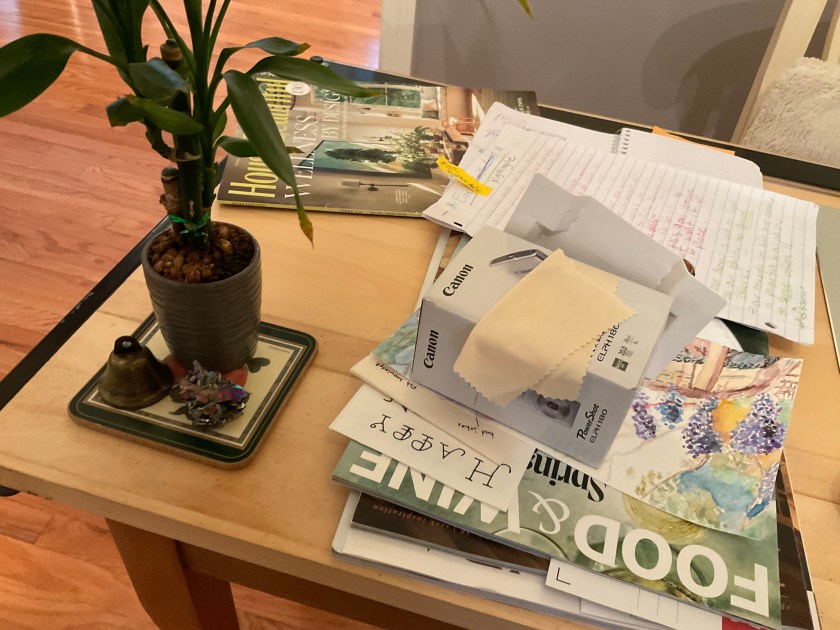
Sighing with exasperation, I stare down at the mess of papers at the end of the kitchen counter. I just cannot seem to make them go away. Supposedly, I have done the work. I’ve read books by the experts, done clearings, given things a home, tried to change my habits and even got a cute basket to gather the papers in. Still, the mess comes back. Why?
I am well aware of the downside of clutter. A messy desk equals poor concentration, and a lack of focus. An untidy pile of laundry in the bedroom can cause sleep disruption or anxiety. And constantly starting at disorder in our environment can be a real downer, and maybe even lead to moodiness or depression. So yeah, there is definitely a lot of reasons why the disheveled disarray is bad for us.
But is it really ALL bad? I mean, everything has an upside, right? Having a lot of stuff that you love doesn’t automatically make it clutter. Clutter is when the “stuff” loses its end goal and just starts taking over the place. I’ve been in spaces like that and there is a real sense of heaviness and confusion. Everything just seems to be screaming out for attention. And that can be an unhealthy drag on our energy.
Clutter also embeds a series of decisions we do not wish to make. Because every decision also comes with a loss, and clutter can be a comfort in not addressing those decisions. Like old photos and memories of the past, it can feel like a piece of our story that we are permanently clearing away.
Nevertheless, after doing a little research about the mayhem, there does appear to be some practical advantages. Turns out, clutter can actually encourage inspiration and creativity. For instance, have you ever noticed a college professor’s desk? It is usually pilled high with papers and books. Or your favorite home chef’s kitchen in the process of making an amazing meal? Even an artist’s studio? The very process of creation is, well, rather messy.
Clutter can even give us pause and remind us that we have enough. It serves as a potent visual reminder to be more aware of our consumption, and mindful of our purchases. Or it can be an optical nudge to complete necessary tasks, such as running shoes left out in a corner to encourage us to exercise more.
We can even turn that mess into a financial gain by selling what is no longer useful, needed or loved. And as we sort through it all, we give ourselves the gift of an emotional release and closure as we let go of what is no longer relevant, providing someone else the opportunity to give our old stuff new love.
All good things, for sure. But the Bottom line is clutter happens, it is just part of life. There is no way I am going to be able to keep the end of my kitchen counter free of papers. The best I can do is to store them neatly in that cute little basket and give them a weekly sort. Because as author and former radio speaker Earl Nightingale once said, “Successful people are not people without problems. They are people who know or learn how to solve their problems.”
And I’d like to use my artistic license to add, “Nor are they people without clutter, they are just folks who’ve learned how to manage it better!”
Coming soon: Megan and I will be resuming our “Let’s keep going” podcast! Stay tuned for more fun discussions on these topics and what we’ve been up to.

Lately, now that I have more time on my hands, I find myself in the kitchen a lot. Cooking has become like art to me, well, it is an art actually. I have become so curious that I find myself browsing though cookbooks in bookstores, and scanning food magazines while I wait in the grocery line. I’ve even taken up listening to a new podcast all about the science and history of food.
And though I may have been feeling the pull toward the culinary arts gradually, I realized that it wasn’t so new. I had always been interested in some form of cooking as far back as grade school. I remember being in my childhood kitchen trying to recreate a recipe for chip dip, that my mother had served at a party a few nights before. Diligently working to combining Miracle Whip with salt, pepper and any other spices I could find. Then there was the cake decorating class I took in the seventh grade, and the time I eagerly convinced my mother to teach me how to make her homemade macaroni and potato salads as a teenager.
I had somehow missed the fact that it wasn’t just the fine arts that intrigued me, but cooking as well. I like the idea of creating little edible masterpieces every time I’m in the kitchen. However, that being said, it has to be easy and it has to be fun. If it is a long drawn out process, recipes that take a great deal of time or are too complicated, I am kind of out. I’ll leave those to my husband!
Mostly it is just me having some fun, playing around and learning what works and what doesn’t. Purely everyday sort of stuff. Until, I got inspired by my favorite food podcast to try something a little more challenging.
After listen to an episode about the history of Chinese American food, I decided to dig a little deeper into my own ancestry and find out what culinary delights it might have to offer. Being a mixture of Irish, Scottish, Canadian and Lebanese it was hard to pick. But since I have always loved Italian food, I decided to go with the Mediterranean side. So, Lebanese it was.
As I explored the rich history of mediterranean food, I stumbled on Maureen Abood and her classic Lebanese Mediterranean cuisine. Perfect, I thought! And as I scrolled through her collection of recipes, it brought back fond memories of the “Syrian food” my Lebanese grandfather and his siblings used to bring to our family gathering on special occasions. The stuffed grape leaves, the Syrian bread, it was all so good!
It didn’t take much convincing for my husband, he was in! And after deciding on an easy dish we were off to the supermarket to source the ingredients for our green bean and lamb stew. It seemed to be about the right skill level for us. “I don’t think we can mess this up,” I confidently said to my husband.
Perhaps a little too simple, we thought, after returning from the store and surveying all the fixings. Hmm, is this going to be good, I mused? Of course, it was best that the recipe wasn’t too complicated, because there is nothing easy about the two of us working together in the kitchen… or anywhere for that matter. We are not good collaborators and I don’t share well when it comes to my kitchen… because it is my kitchen after all! Let’s just say the stew wasn’t the only thing quietly simmering away. But as the delightful aroma started to waft through the air, all was forgiven.
And the results? The green been and lamb stew was amazing! Lip smacking good!! It just goes to remind me that some of the best things in life are the simple, uncomplicated things. The moment making stuff. The mundane stuff I guess, except there was NOTHING mundane about that stew! My Lebanese grandfather would have been proud!
If you are interested in the recipe or want to learn more about Maureen and her Lebanese Mediterranean Cuisine, I have attached a link to her website: https://maureenabood.com/

Recently I’ve written a lot about the Water Element. Maybe because here in the Northeast we are stuck in the throws of a particularly brutal winter. We’ve got more than we asked for in snow and frigid temperatures. In fact, if anyone needs some extra of either, we have plenty to spare!
I am not a winter enthusiast, I loathe it. As my husband will tell you, anytime we get an ounce of snow, I have a mini meltdown. I can’t tell you how many time my heart has sunk into my chest as I made my way down the stairs, only to look out at yet another unexpected snowfall blanketing the driveway. “It’s nature, you can’t control it,” my husband calmly, and ever so slightly amused, responds to my exasperation at the sight of my fluffy white nemesis.
Winter just feels so long and isolating. It is supposed to, I know. “But I have a lot of Fire Element in my personality and I need warmth and sun,” I grumbled to my friend Theresa, while we sipped on jalapeño martinis during a recent “girls night out” dinner. “Yeah, it’s been harsh,” she acknowledged, taking a bite of her pasta. “But come July, we are going to be whining about the sweltering 90 degree weather!” “Fair enough,” I agreed, as we switched the topic to AI.
And that’s just it, some people are fine with winter, the ones who like to hibernate in the basement playing video games or watching movies. Perhaps for the folks out on the ski slopes, or for those to whom social interaction and human contact is not such a big deal. Actually, for those people, too much human interaction can be a real drag on their nervous system. But those of us for which community and socialization are vital, the quiet solitude of winter can be a bit underwhelming and depressing.
In fact, solitude of any kind can be challenging for certain types of Fire Element personalities, especially if it represents their evolutionary path and core issue in life. These are the open-hearted individuals, for whom connecting with others is essential. But sometimes, in their zeal to make others feel loved and seen, this same trait can make them a bit of a pleaser. And hidden beneath that, lies the fear of rejection.
One of my favorite 9 Star Ki mentors told such a story about a client of their’s, who they had worked with many years ago. The client had recently moved to a new city and felt lonely and isolated. In her desire to make new friends, she often spent hours sitting in the office of her apartment complex listening to people come in and spew out all their problems. However, she did not get paid to sit and listen to these people, and they were not her friends. They just came to unload their frustrations and leave feeling better.
Because her heart was so open and she craved friends, she lacked discernment and boundaries. Instead of finding new friends, she became a lonely service provider. And the fear of rejection resulted in her spending too much time in the office, which prevented her from discovering healthier relationships, and more enjoyable ways to socialize.
But fortunately, with some gentle coaching from my 9 Star Ki mentor, she eventually did move on from the office, and found more pleasurable ways to meet people.
As for me, I think I’ll hideout in the warmth of my cozy kitchen. Imagining balmy summer days, while creating savory suppers and comfort food to enjoy with my family and friends. And as we gather around the table in the solace of good company, we’ll raise our jalapeño martinis in a toast to the coming spring.
So take that my fluffy white nemesis! Even though Punxsutawney Phil has predicted six more weeks of winter, you can’t hold off those daffodils forever! And as for old man winter, yeah… I don’t think we’re going to be friends.
Lately, I have been drawn to watercolor painting, and as I sat mixing shades for my latest project, It occurred to me how similar the 5 Elements and primary colors are. Each has a unique foundation, an underlying basis or principle that can not be created. But they can be altered by mixing and fusing with each other, to produce unique and beautiful one of a kind hues, or Elemental patterns.
Just as a well trained artist knows how to bring a composition to life, skillfully using pigments and tone to create beauty and interest, or invoke our emotions. So too, do the Five Elements dance with each other to create fascinating patterns, personality traits, and colorful code words.
And I see and hear those patterns, traits and vivid code words everywhere. I almost can’t help it. An occupational hazard, I guess. In fact, a few days ago while I was listening to one of my favorite psychology podcasts, it happened again! The guest was inadvertently using so many descriptive Elemental code words to describe her work, that I actually couldn’t focus on what she was saying anymore. I felt compelled to pause the podcast and try to look up her numbers. Fortunately, she was a professor at a prominent university, and I was able to find her birthdate.
But even if I couldn’t have gotten her numbers, I was pretty sure I knew what her Elements were. Sometimes our Elemental traits speak so strongly, that it is almost impossible to miss. As was the case with this professor.
Indeed, she was predominantly Water Element. Of course, she also had some Earth and Metal Elements in her nature, but her Water was definitely talking throughout the interview.
From the beginning, her story captivated me, especially how firmly it linked with the Water Element. She holds a Ph.D in behavioral decision research and on this episode of the podcast she was discussing the cost of concealment. Her research suggests that the secrets we keep hidden from others can erode our connections and clog our mental space. (Water erodes, think of the Grand Canyon and the brain is actually associated with the Water Element.) And as she explained, we do this out of lack of trust, or fear that we will be judged by others.
Hmm… concealment, hidden secrets, erosion, fear, I thought. All associated with the Water Element, and the fact that she has chosen to make a career out of this particular research, fascinating! Water folks love to dwell in the covert deep abyss of the unknown, and they can be extremely secretive and distrustful, especially when they get hurt.
But for me, the most interesting part of her story was when she described an incident that happened years before at a “rookie” academic job fair, involving what she termed “mutual self disclosure.” Which is the reciprocal, voluntary sharing of personal information, feelings or experiences, as a way to build trust and intimacy. And in her words, she had a “reciprocity fail.”
Fresh out of college and seeking a career in academia, she attended the robust event at a large hotel, where all universities that are recruiting rent out suites. Every hour on the hour, all the candidates move from room to room pitching themselves and presenting their research.
As she is waiting for the elevator to go to yet another suite, the doors open and she steps inside and notices there is only one other job candidate on the lift. As the steel doors close, she wearily looks at the the man, and utters that she is completely exhausted from the days events, hoping he will commiserate with her, and they can have a shared moment of friendship. But he doesn’t. Instead, he straightens up and cheerfully responds, “oh this is such a fun opportunity to get senior faculty to weigh in on all of my research! It is just so amazing!” Reciprocity fail.
But the thing is, he’s probably Wood Element, possibly even mixed with some Fire Element. Mingling with the senior staff, being able to present his stuff, get some valuable feedback, perhaps even set some new goals… it likely was energizing and awesome for him.
However, she is Water Element, and being around all those people in such a structured, fast paced environment, was exhausting for her. As I perceived it, it wasn’t so much a “reciprocity fail,” as much as an Elemental patterns mishap or rather mismatch. It’s probably not that he didn’t take the olive branch or mean to shut her down, he just didn’t experience the event in the same way. But as she noted, the sting of that encounter still lingers.
And it would. For Water Element folks, the “sting” can last a very long time. They tend to “lose their voice” and trust when they get hurt. At the extreme, they disengage or disappear from the relationship. As was the case for the professor. Even though she admits they regularly see each other at conferences, and she acknowledges that he’s probably “a very nice guy,” she never again felt the desire to “chat him up.” Imagine if they had just understood each other’s Elemental patterns, they could have been life long friends!
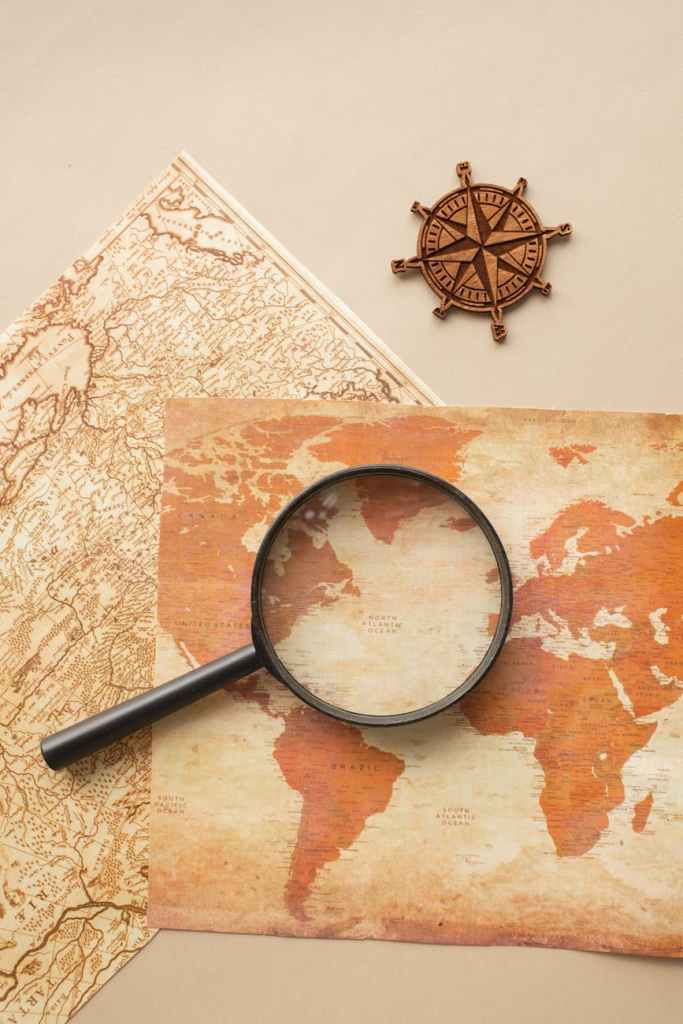
For many people, the new year begins in January, with fresh expectations and newly minted goals in hand. But for me, February is when I start to think about the year ahead. And it’s not so much about the goals or achievements that I am pondering, but rather the questions I will ask of the coming year.
Because in the astrological system of 9 Star Ki, February 4th begins the shift. And with it comes distinctively new energetic patterns and “homework,” for each year. I have found it to be a valuable and interesting way to look back at the year that has just ended and gain insight into the year that is emerging. It helps us to decide if it’s the best time to push forward or to rest and reflect. Sometimes with jaw dropping accuracy, and at other times, with a simple shrug and a “yeah, that happened.”
And in 2025, I was in one of those quiet reflective years. It is called a year of “transformation,” but to me it felt more like being stuck in the mud. Thick mud, the kind your boots get stuck in on an early spring day, when the snow starts to melt. Moving forward was an enormous effort and nothing seemed clear. Communication can be difficult in a year like this, and little details can be missed. And even though I knew this going in, it still happened.
In September, while attending a one time blogging class, I was discussing my work with the 9 Star Ki, when couple of interested classmates asked me for my website information. Later, as I was recounting the events of the evening to my husband, he looked at me with mild irritation and replied, “you gave them the wrong website name!” And sure enough, I had. Those pesky little “details!”
However, even though 9 Star Ki is a remarkable way to understand our energetic patterns and yearly cycles, it is not a fortune cookie or an immutable predictor of fate. We still have to do the work. Essentially, it is a tool that shows us our energetic “weather” for the year.
But precisely because it is so accurate, it can be tempting to rely on it a bit too much, and instead treat it as a way of life. The same can be true of Feng Shui, Western Astrology or any of the instruments we use to help us navigate our journey in life. When I first started studying this system, I did just that.
In late winter of 2011, my husband started a new career path that required our family to relocate from New Jersey to Albuquerque, New Mexico. Though I knew the move would be stressful, I was more amazed at the accuracy of the energetic pattern, than surprised. I had just entered a season of rapid growth and change, and I figured why not? Let’s just go for it, and so we did.
Of course, as with any move, especially a major one, there were challenges. But when the dust settled, we started to make friends and form a new community. However, in the spring of 2013, when my husband had entered into the same cycle of change that I had been in two years prior, his company abruptly moved his entire group back east.
The challenge, besides the fact that we were facing yet another cross country move, was that I wasn’t in a year of change. In fact, I was in an “eye of the hurricane,” as Jean Haner, the author of Your Hidden Symmetry, calls it. And the advice for the year is to stay put!
I panicked. “What am I to do?” I pleaded with my 9 Star Ki teacher, “I can’t move, it’s the wrong year!” Though she did not seem too concerned, because it was the “eye of the hurricane” after all, and her advice was simple. “Just don’t take the lead, let your husband handle the big details,” she replied. “Give yourself some extra time and expect that there might be some complications.”
Well, not only didn’t I take the lead, I completely gave it to my husband (which is not what she told me to do, by the way). I followed the script for the year a little too closely and ended up giving myself a lot of complication. Complications that lasted years, because not only was he in a year of change, but he was also in a year where he could be impulsive. And he impulsively bought a house… without me. As you might imagine, this did not go well for either of us!
The point is, I wasn’t supposed to give my power up because a 9 Star Ki yearly cycle advised not to move. Life happens. What I was supposed to do is expect that there might be some extra challenges. Instead, I took it too literally and got a house and a community that wasn’t the best fit. And as my wise Five Element acupuncturist always reminds me, “it is meant to be a tool, not a way of life.”
And that is exactly I how I approach the 9 Star Ki energetic cycles now. With wonder and curiosity. A way to look back, reflect, and gain some insight, and maybe even do a little yearly homework. But mostly as a valuable roadmap on my journey through time.

